What’s the difference between a ligament sprain and a muscle strain?

Hey everyone, Here’s a concept that comes up all the time, so I wanted to take a moment to clarify it. What is a ligament, and what is a tendon?  And what happens when we injure each one? A ligament is a very tough band of connective tissue that connects one bone to another.   LigamentsContinueContinue reading “What’s the difference between a ligament sprain and a muscle strain?”

Positions where the SI joint is more or less stable

A huge part of my recovery, in addition to learning which exercises to do and which specific interventions to use, was learning what not to do. As I wrote in a previous post, the SI joint is like a puzzle.   For me, the process of understanding my own joints had to be very intellectual.  AsContinueContinue reading “Positions where the SI joint is more or less stable”

The four main types of SI joint dysfunction

Hey everyone! I’ve been thinking a lot recently about different ways to classify different types of SI joint dysfunction and pain.   When most people think of SI joint dysfunction, they think of it as the result of a musculoskeletal injury. However, there are other potential reasons for why people may experience SI joint pain.ContinueContinue reading “The four main types of SI joint dysfunction”

The Pubic Symphysis: the joint at the front of the pelvis

Hey everyone, If you’re experiencing SI joint dysfunction, the pubic symphysis is another important joint to be aware of. The pubic symphysis is actually the third major joint that makes up what is often referred to as the pelvic ring, or pelvic circle. Everything is connected. Like the SI joints, the pubic symphysis isn’t intendedContinueContinue reading “The Pubic Symphysis: the joint at the front of the pelvis”

SI Joint Concepts: Form Closure vs. Force Closure

Here is a really important concept about the SI joint: How is an SI joint supposed to stay in place? The body has 2 main systems to maintain stability in the SI joint: Form closure and force closure. 1) Form closure has to do with the shape of the bones that make up the SI joint (the two hip bonesContinueContinue reading “SI Joint Concepts: Form Closure vs. Force Closure”

Labral tears

Hip labral tears are a condition that can sometimes accompany sacroiliac joint dysfunction. The labrum is a ring of cartilage found within the hip socket.  Its main purpose is to absorb shock, as well as to help make sure your leg bone fits snugly inside the hip socket. Cartilage is generally pretty tough, but sometimes itContinueContinue reading “Labral tears”

SI Joint Concepts: Useful Terminology

Looking back, I can see that part of the reason it took me so long to get information on the SI joint is that I simply didn’t know where to start looking. Since I first injured my SI joints back in 2011, it does seem as though there’s a lot more information available now (andContinueContinue reading “SI Joint Concepts: Useful Terminology”

The ligaments of the SI joint

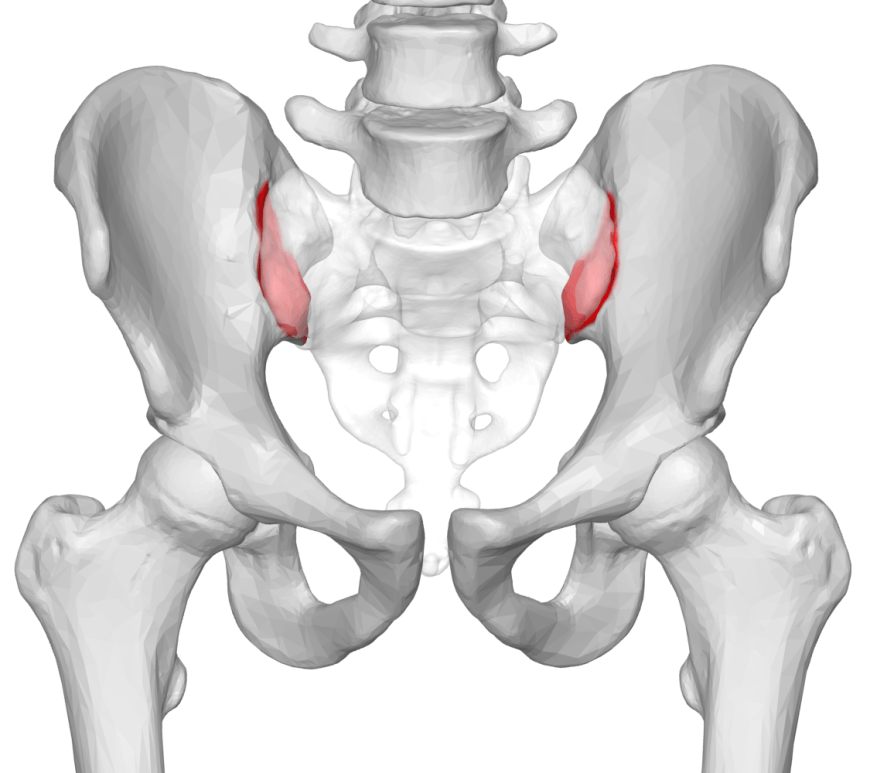
The SI joint is mainly held together by bands of connective tissue known as ligaments.   These ligaments hold the sacrum (base of the spine) and the ilia (hip bones) together to make up the two sacroiliac joints. The bones of the SI joint Here are some diagrams which give you a general view ofContinueContinue reading “The ligaments of the SI joint”

Tight muscles can mimic SI joint dysfunction

Now that my SI joints themselves are actually staying stable (thank God!) I can begin to identify other factors that may have been contributing to my pain, and causing my sense of being off-kilter, all along. What I’m referring to specifically in this post is tightness in the muscles of the lower back.   WhenContinueContinue reading “Tight muscles can mimic SI joint dysfunction”

SI Joint Concepts: Hypomobility and Hypermobility

Hey everyone, These are some common terms relating to the SI joint which, unfortunately, can be very confusing to a lot of people.  Let’s clear them up! The words hypermobile and hypomobile can be used in a few different ways to describe the SI joint, or any joint in the body. Let’s start by talkingContinueContinue reading “SI Joint Concepts: Hypomobility and Hypermobility”