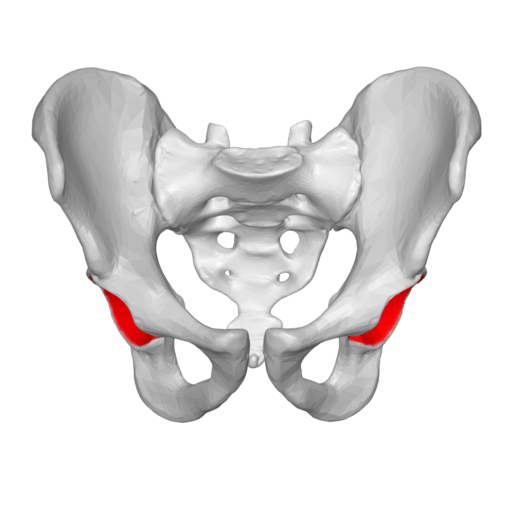
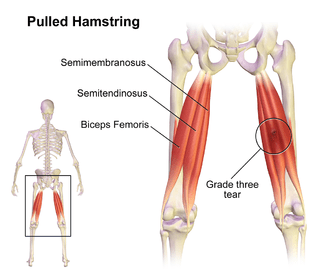
Well, I knew it had to come eventually– the day I slipped and fell on ice, and landed on my butt. Blunt force to the SI joints, particularly if it’s asymmetric, is known to be a potential cause of injury. That’s because it can subject the ligaments to greater force than they can handle, stretchingContinueContinue reading “Facing one of my worst fears: a potential reinjury”
Category Archives: My Writing
What is Prolotherapy? (and why I didn’t end up having it).
http://www.youtube.com/watch?v=6NsgU4FVYOA A reader asked me if I’d ever had prolotherapy yesterday, and since I’ve been meaning to write about it for a while, now seems like the right time to put this out there! What is prolotherapy? Prolotherapy is a relatively new form of treatment, meant to speed the healing of sprained ligaments. It involvesContinueContinue reading “What is Prolotherapy? (and why I didn’t end up having it).”
The Pubic Symphysis: the joint at the front of the pelvis
Hey everyone, If you’re experiencing SI joint dysfunction, the pubic symphysis is another important joint to be aware of. The pubic symphysis is actually the third major joint that makes up what is often referred to as the pelvic ring, or pelvic circle. Everything is connected. Like the SI joints, the pubic symphysis isn’t intendedContinueContinue reading “The Pubic Symphysis: the joint at the front of the pelvis”
SI Joint Concepts: Form Closure vs. Force Closure
Here is a really important concept about the SI joint: How is an SI joint supposed to stay in place? The body has 2 main systems to maintain stability in the SI joint: Form closure and force closure. 1) Form closure has to do with the shape of the bones that make up the SI joint (the two hip bonesContinueContinue reading “SI Joint Concepts: Form Closure vs. Force Closure”
Labral tears
Hip labral tears are a condition that can sometimes accompany sacroiliac joint dysfunction. The labrum is a ring of cartilage found within the hip socket. Its main purpose is to absorb shock, as well as to help make sure your leg bone fits snugly inside the hip socket. Cartilage is generally pretty tough, but sometimes itContinueContinue reading “Labral tears”
Key Point #1: Identifying the problem
Honestly, as much as I have criticized chiropractors at times on here, I know I would have been completely lost when my SI joint first locked up back in 2011 if my chiropractor hadn’t been able to explain things to me. I’ve flat out never seen a physician that had anything truly helpful to sayContinueContinue reading “Key Point #1: Identifying the problem”
What made one of my SI joints lock up for the first time in 8 months?
Well, I had a feeling it was inevitable… I knew that, at some point, my SI joints were probably going to lock up again. And, at the end of last week, it happened. As is the case with most things that go wrong with the body, I think a combination of factors came together hereContinueContinue reading “What made one of my SI joints lock up for the first time in 8 months?”
Main functions of the SI Joint
Hey everyone, If you’re anything like me, you had never even heard of the SI joint before you injured it. What is the SI joint, and what does it do? Basically, what I tell people is that the SI joint is where the pelvis and the spine connect. The SI joint doesn’t really move inContinueContinue reading “Main functions of the SI Joint”
SI Joint Concepts: Useful Terminology
Looking back, I can see that part of the reason it took me so long to get information on the SI joint is that I simply didn’t know where to start looking. Since I first injured my SI joints back in 2011, it does seem as though there’s a lot more information available now (andContinueContinue reading “SI Joint Concepts: Useful Terminology”
The ligaments of the SI joint
The SI joint is mainly held together by bands of connective tissue known as ligaments. These ligaments hold the sacrum (base of the spine) and the ilia (hip bones) together to make up the two sacroiliac joints. The bones of the SI joint Here are some diagrams which give you a general view ofContinueContinue reading “The ligaments of the SI joint”