The battles only we understand: When sitting is an athletic accomplishment

Hey all,

I posted about this on my socials last week and it seemed to resonate with a lot of people, so I thought I’d share it here, too.

During the worst of my SI joint saga, I couldn’t sit.

I’d try to go to the Starbucks closest to me, and the most I could make it was an hour (tops) sitting in their wooden chairs.

I wanted to be one of those people who’d stay all day working on things, lost in thought, but I just couldn’t.  My SI joints hurt too much.

Sometimes I’d try to push through the pain – mind over matter, right?  But I’d get up and I’d have radiating numbness and tingling down my legs.

I snapped these photos last week after I realized I’d been sitting out on the Panera patio all afternoon, and I hadn’t even thought about the chairs.  I’d been working on things and got lost in thought, the way I’d wanted to all along.

And it got me thinking how this is something only we understand. 

Most people dont think of sitting as a huge athletic accomplishment. I know I wouldn’t have. But now that i’ve been through it, I know what it took to get me this far.

I had to:

1. Learn the major muscles at play

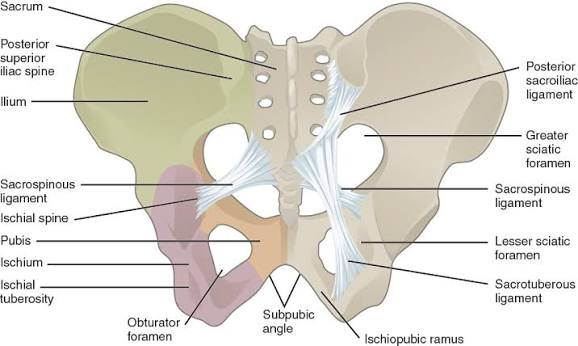
The SI joints are supported by a combination of passive and active stabilization systems. Your passive stabilizers include the shape of your bones, themselves, as well as the ligaments that are meant to hold them together.

In SI joint dysfunction, those ligaments have been sprained, and are no longer able to fully do their job. So that’s where you have to turn to your active stabilization systems, to really build up your stability again.

Muscles like the glutes, the transverse abdominis, and other core stabilizers are huge here.

2. Find a balance between strengthening and learning to be gentle on my ligaments

Most standard PT exercises don’t work for the SI joint because they fail to take into account the fact that the ligaments have been sprained.

I found that once I’d sprained my SI joint ligaments, the entire joint behaved very differently. One of the principle functions of the SI joint is force transfer – meaning, every time you move, various forces travel up your legs and through your pelvis, directed in a graceful and coordinated way.

But the thing is, once you’ve sprained the ligaments, this entire force distribution system gets thrown off. It can’t function in the way your body was designed to.

That’s why exercises that should technically be “easy” according to your PT are in fact difficult, or can even make you feel worse.

Over time, I found that there are ways to build up your muscles, without constantly re-inflaming the joints. I had to learn to be very intentional about it. It wasn’t an automatic process. Rather, it was more like solving a puzzle, where I had to figure out how to put each piece in place.

SI joint ligaments

3. Optimize my movement patterns to move my body in the most efficient way possible

The tricky thing about ligament sprains is that the very process your body uses to heal the ligaments can also make them more inflamed.

After an injury to the ligaments, our body sends white blood cells to the area to repair it. These cells release a ton of signalling molecules, which in the long run help to heal the tissue as well as signal even more repair cells to come to the area.

But it’s a weird paradox- when these chemical messengers are present in high numbers, they actually make the ligament more stretchy – meaning it is even less able to hold your joint in the correct position.

When you’re stuck in a cycle of inflammation like this, you really want to avoid providing even further insult to the ligaments. That’s why simply pushing through the pain doesn’t work – you have to be way more strategic in what you do.

I had to find a way to strengthen the muscles to support my SI joints, while minimizing the impact and cycle of inflammation in my ligaments (and that is what I’m so excited to share with my readers and coaching clients now!).

If you’re dealing with SIJD too, please don’t ever think these things are small.

Every win – even if it’s something as “small” as sitting in a chair without pain – actually represents a huge amount of strategy.

For so long, I didn’t know if I could get back to “normal.” Now I am living proof.

Leave a Reply