Hey, all:
A couple people have reached recently to ask if I’m still coaching.
The short answer is yes, I am – I just haven’t been able to work on my site as much I’d like recently. If you’re new to my blog (or just catching up!) here’s what I’ve been up to – and I want you to know about recovery from SIJD.

I started this site in 2016, when I was going through the absolute worst of my SI joint saga. My entire life was on hold, and I decided to level up and treat it like my job to get better. Piece by piece, I began to discover what I needed to stabilize and heal – and began offering coaching sessions as more and more readers reached out for help.
In 2023 I got Long COVID. It was nothing like what I thought. When you see it in the news you think it’s something people recover from. In my reality it wasn’t. I actually think I almost died.
I knew if I was going to get out of this, to recover from a disease with no known cure, I was going to have to throw myself into it full-time. So I threw myself into it. Into networking, research, trying treatments. And working at a non-profit that’s working to discover LC treatments.
It’s been 3 years and I’m doing a LOT better. Let me tell you, it is NOT something that happened naturally. It is only through my own self-treatments. And I’m lucky that they happened to work for me. I know other people who’ve tried the same things and didn’t get the same results. (Long COVID likely has more than one different underlying cause).
I had to study the nitty-gritty of immunological sciences. I had to learn about the chemical pathways our body uses to make energy; our antiviral signaling mechanisms and how they can be suppressed or augmented. It was a desperate effort to save my own life.
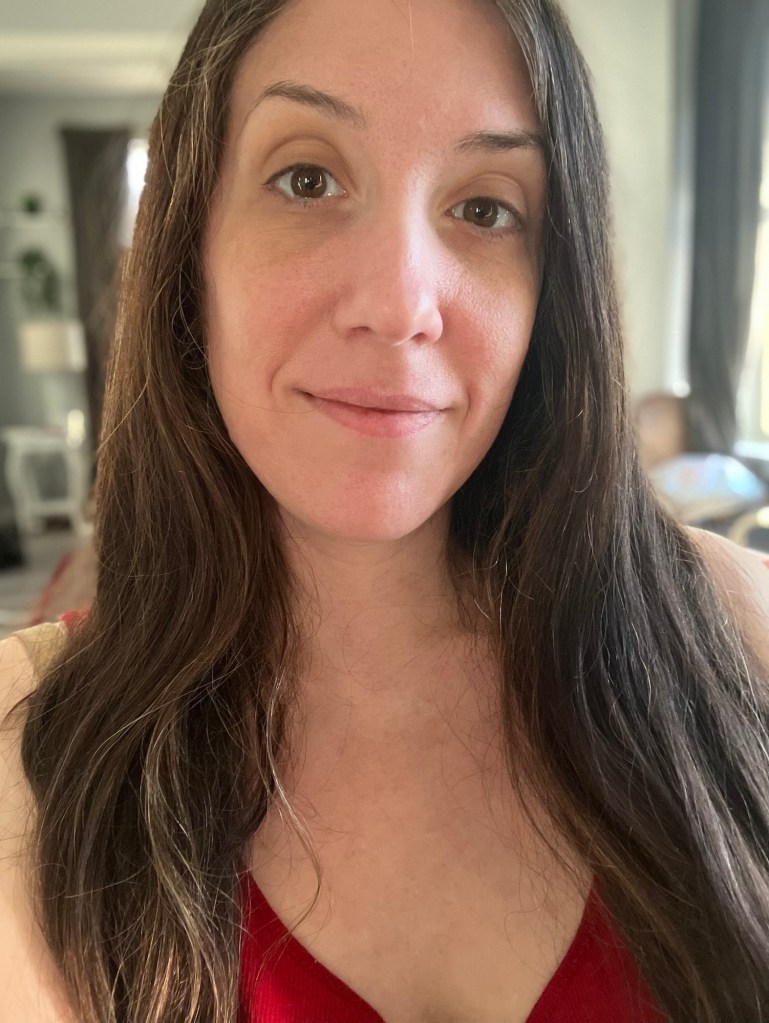
Now I’m at a point where I’ve recovered from about 75% of my symptoms. And again I hesitate to put this out there because I don’t want to feed into the common media narrative that this is something everyone recovers from with time- because that is absolutely not true. (It may serve as an inspirational story in the short term, but it downplays the overall scale of the crisis).
Please know that I didn’t share the worst of it, I’m only sharing snippets of my success now. Because it’s the only way I can talk about it at all.
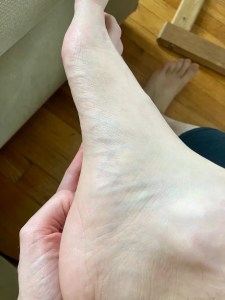
These days, one of my major remaining symptoms is that I get a lot of pain in my legs when standing. It’s completely unrelated to the SI joint. Throughout all of my investigations, I appear to be closing in on the answer. It’s actually a known medical condition known as an iliac vein compression, which cuts off your blood supply to the lower legs. (The condition is also referred to as May Thurner Syndrome).
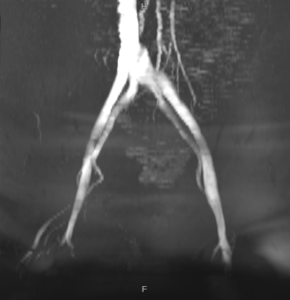
While it’s a bit scary to realize I have a vascular condition that likely requires surgery (a stent placed in my hip, specifically), at this point it’s a relief to have a known medical condition that has an established treatment course.
Trying to get treatment for Long COVID has been an unending odyssey, when so many medical professionals don’t know how to treat it, or worse, don’t even believe it’s real.
So, this is something I know how to do. I’ve been through this process before, with the SI joint, with hypermobility, with mast cell activation syndrome. I know there are going to be physicians who seem highly qualified on paper, who are going to end up saying things that are completely wrong. And eventually, if you keep trying, there are going to be people who get it.
I’ve been pushing hard the last few months to finally get answers. I got an ultrasound showing damage to the values in the veins in my legs – likely a result of the compression in my hip putting pressure on those valves.
I’ve been interviewing surgeons – not based on who’s in my geographic area, but rather via word of mouth recommendations from patient groups. Iliac vein compression (like SIJD, like so many of the things we talk about here!) still doesn’t seem to be very well understood, or have a clear consensus in medicine. I’ve seen surgeons who dismissed me off-hand, and I’ve seen others that have been able to give me very nuanced, detailed answers – not only about the compression itself, but also about its relation to MCAS, to hypermobility, and to many of the symptoms I didn’t have an answer for. And these are going to be the people to help me.
I do think I’m going to be able to move forward here, and find a way to get improvement in a lot of these remaining symptoms. It’s taken me 3 years to get here – and I’m so grateful to those of you who encouraged me along the way. Truthfully when this first happened to me, I couldn’t see a way forward at all. The kind words I received from many of you helped me begin to capture a glimpse of a possible future recovery I couldn’t fully envision.
Which brings me to my next realization: I think, in these situations, it really helps to begin to picture success. Think about what it would look like to recover, what needs to fall into place, and then work backwards from there. What are the steps you need to take to get there?
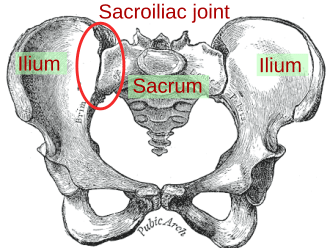
For the SI joints, it is:
- Are my SI joints in alignment, and if not, how do I correct that?
- How do I allow the joints to stabilize, by:
- Taking pressure off of the ligaments that have been sprained
- Building up my muscle strength to support the joint

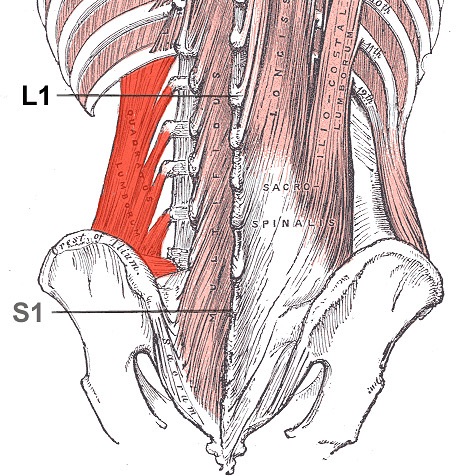
There’s a lot you can do here, when you really start digging into it (ie optimizing your movement patterns, developing better nervous system control, and more!). But these are the main principles to architect your SIJD recovery around.
Now, I know that I probably could have recovered from SIJD much sooner if I’d been able to hold these principles in my mind. But at that time, I had no roadmap, I had no one to tell me it was even possible. So I floundered – I tried the wrong things, I got scared and had to take breaks at times, not knowing if the next thing I’d try would make me worse.
But I’m here to tell you that it is possible. I’m no longer prevented by my SI joints from living a normal life.
Although this isn’t quite what I thought this stage of my SIJD recovery would look like, I’m here to tell you that I’ve travelled much of the Eastern seaboard in the last few months on my quest to interview vascular surgeons for Long COVID.
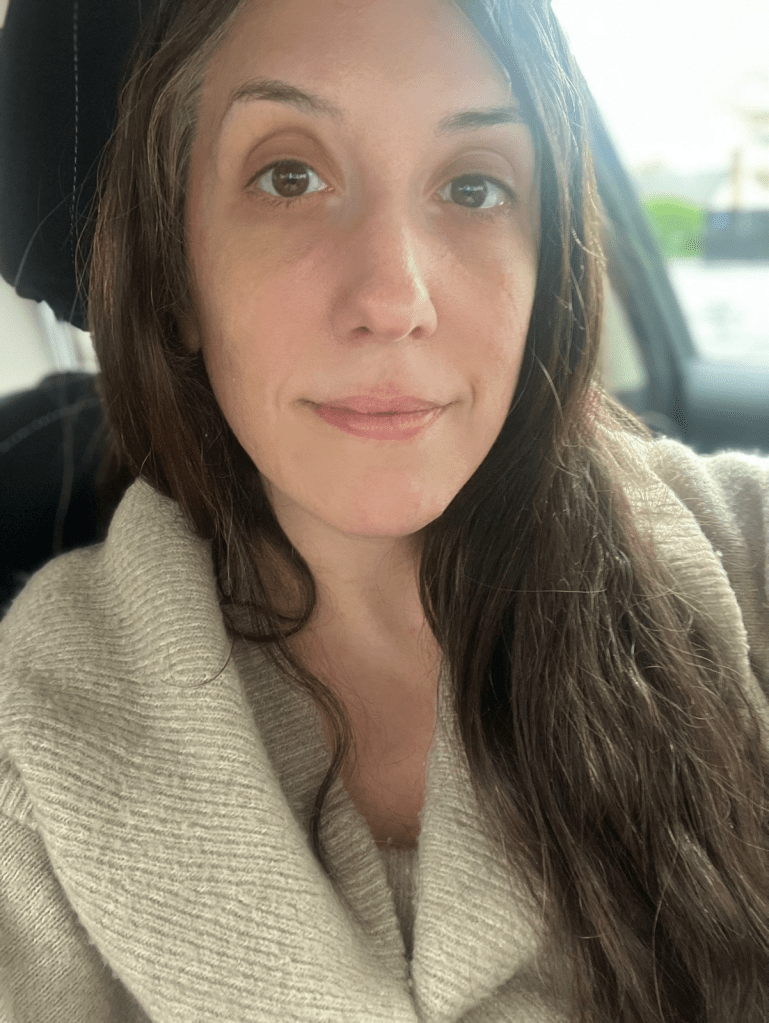

So much of my life used to be on hold due to my SI joints – now I’m driving myself. From Boston, I’ve traveled to southern Connecticut, to Long Island, and most recently, to DC. I’ve stayed in hotels, I’ve handled my own luggage. (To be clear, I am in pain due to the vein issues, but my SI joints are no longer a limiting factor!). I never used to travel at all, I would even avoid driving a few miles when possible because of the risk of my joints going out of alignment.
Now, I just go.
I wish, of course, that this hadn’t happened to me. I wish I had a more picturesque version of recovery to share with you, to say that I’m climbing mountains or relaxing on a beach.
But there is still joy in this, of finding answers, of moving forward. I’ve had some low moments, only to have my faith restored by the kindness of strangers. I’ve gotten pep talks from hotel front desk employees; kind words from the drive-through cashier at 1 am. These little things can mean a lot. And of course now, the clarity from knowing I’ve begun to put the right pieces into place; that once again, I can see a way forward.
So I wrote this to let you know: I am here. I haven’t always been able to work on this site as much as I’d like, but I absolutely am still doing coaching sessions with those of you who book.
It truly means a lot to me, to connect with you all and to be able to help people based on the lessons I myself discovered; to see my story can have a ripple effect. It doesn’t change what happened, but sometimes it does make it seem almost worth it if I can help other people move forward.
So, I am still here. I hope to work on this site even more in the next few months, as I move out of the background research stage with my vein issues and towards implementing actual solutions.
I feel more driven than ever to share my message- that there are always things you can do, but you have to research, you have to believe in yourself, you have to reach out and grasp for answers- and maybe even create those answers, if no one’s done it before.
You can do this. We can do this. I do think the world is changing for the better, in this way. Every day I go on social media and I see both patients and medical professionals alike advocating for chronic/invisible/poorly understood conditions. We are demanding to be heard, and pushing back against the gaslighting, dismissal, and medical misogyny that have held us back for so long.
We’ve got this. I’ll see you there.
 My Sacroiliac Joint Saga
followed your saga years ago ,have found your suggestions very useful.
have you been diagnosed with ehlers danlois syndrome ??
LikeLike